Quick answer
The best picasso museum malaga paintings to prioritize are the Cubist portraits, the Neoclassical family pieces from Picasso's own life, and the early academic studies that show his training before he broke from tradition, plus a standout run of later ceramic pieces.
If your time inside is limited, these are the picasso museum malaga paintings and pieces worth prioritizing, curated from across the permanent collection rather than a room by room walk through everything on display. Each highlight below represents a distinct stretch of Picasso’s career, so working through them in order gives you a real sense of how much his style shifted over six decades.
This guide builds on our Picasso Museum Malaga planning resources, specifically the broader overview of what to see at the Picasso Museum Malaga, focusing on the individual pieces and rooms worth slowing down for if you only have limited time.
How Was This List of Picasso Museum Malaga Pictures Chosen?
Rather than ranking by fame or market value, this list groups the collection’s standout picasso museum malaga pictures by the moments in Picasso’s career they represent best: his academic training, his Cubist breakthrough, his Neoclassical family period, and his later ceramic work. That structure mirrors how the galleries themselves are arranged, so you can use this list as a rough route through the museum rather than a scattered checklist.
What Should You See in the Early Academic Rooms?
The opening galleries hold drawings and studies from Picasso’s teenage years in Málaga, made under his father’s guidance as a working art teacher. These academic sketches are some of the rarest picasso museum malaga pieces on public display anywhere, since they rarely travel outside this specific collection and show a level of technical discipline that surprises visitors who only know his later, more radical work.
Look closely at the proportion and shading in these studies. Seeing how rigorously trained Picasso was before he started dismantling those same rules makes the Cubist rooms that follow feel far less arbitrary.
What Are the Standout Cubist Paintings?
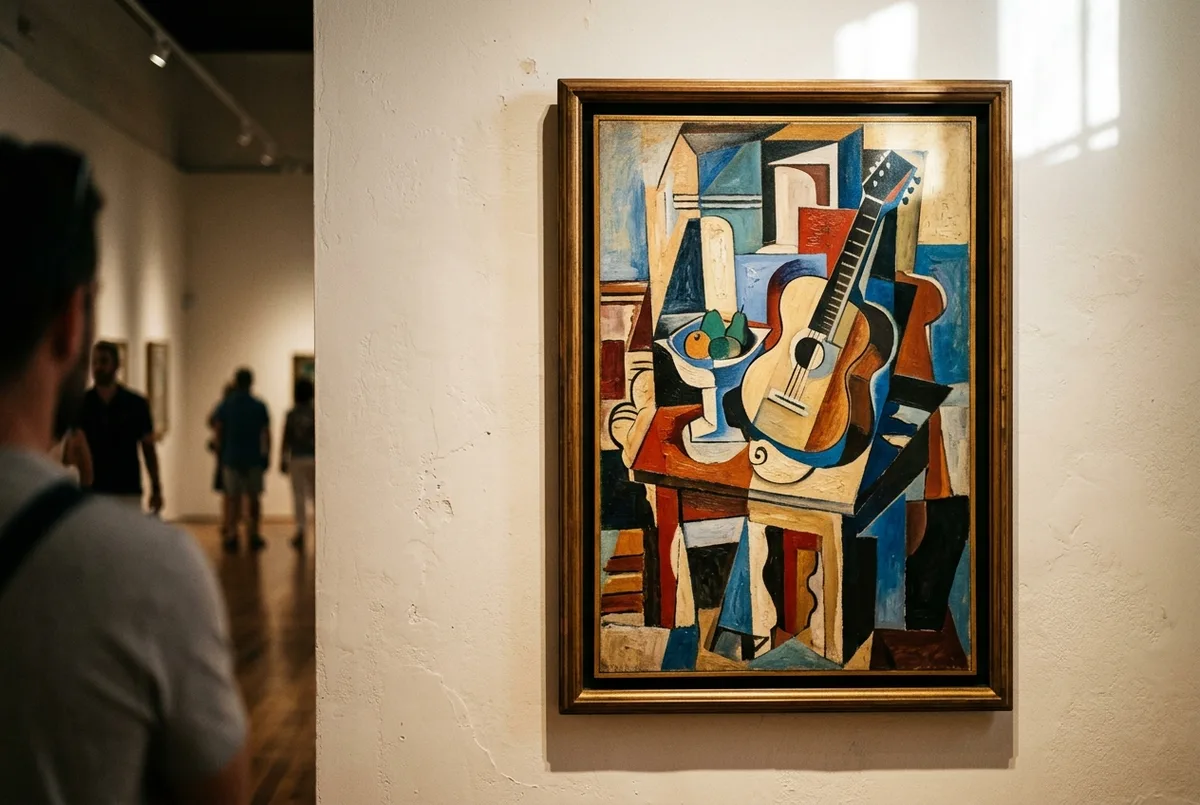
The museum’s Cubist holdings sit at the heart of the collection, showing figures and everyday objects broken into fractured, geometric planes during the period when Picasso, working alongside Georges Braque, redefined what a painting could represent. One large scale Cubist composition in particular tends to hold visitors longest, its overlapping planes rewarding a slow look from multiple angles rather than a quick glance.
This is usually the busiest room in the museum during peak hours, so an early morning or late afternoon visit gives you the best chance to study these paintings without a crowd building up behind you.
What Are the Standout Neoclassical Portraits?
Alongside the Cubist rooms, a striking set of Neoclassical portraits shows Picasso working in a calmer, more figurative register during roughly the same period, drawing on classical proportion rather than fractured form. Several of these portraits connect directly to Picasso’s own family circle from that time, giving them a more personal, intimate feel than the boldly experimental Cubist works displayed nearby.
Seeing these two very different styles from around the same years, side by side in neighboring rooms, is one of the clearest ways to understand that Picasso was rarely working in just one mode at a time.
What Ceramic Pieces Are Worth Seeing?
Later in the collection, a run of painted ceramic pieces from Picasso’s years in the south of France shows him applying his eye for form and pattern to functional objects rather than canvas. Plates, vases and figurative pieces fill glass cases in this section, playful in tone compared to the intensity of the Cubist rooms earlier in the visit. Many first time visitors are surprised this section exists at all, since ceramics rarely feature in general knowledge of Picasso’s output.

Which Single Room Do Most Visitors Linger In Longest?
Based on typical visitor pacing, the Cubist gallery tends to hold people the longest, followed closely by the Neoclassical portrait room. Both reward a slower pace than the earlier academic studies or the later ceramics section, so if you are managing a tight schedule, budget extra minutes specifically for these two rooms rather than spreading your remaining time evenly across the whole museum.
Should You Use the Audio Guide for These Highlights?
Yes, the included audio guide fills in context that the museum’s brief wall text does not cover, particularly around why certain pieces from the family’s own collection had rarely been shown publicly before this museum opened. For the specific paintings covered on this page, the audio commentary tends to explain the period and technique in more depth than a quick read of the nearby label.
What Should You Look For in the Cubist Room Specifically?
Beyond the overall impression of fractured form, look closely at how the largest Cubist composition in the room layers flat planes of color to suggest depth without using traditional perspective. Standing at a slight angle to the canvas, rather than straight on, often makes the layered structure easier to read, a trick worth trying if the piece feels flat or confusing on a first glance. Comparing this room to the academic studies you passed earlier is the fastest way to appreciate how completely Picasso rebuilt his own approach to representing a subject.
Do the Neoclassical Portraits Connect to a Specific Period in Picasso’s Life?
Yes, the Neoclassical portraits on display date from a stretch when Picasso was balancing family life with his continuing experiments elsewhere in his work, which is part of why these pieces read as warmer and more personal than the Cubist rooms nearby. Knowing this context before you reach the room changes how the paintings land, since you are looking at a working artist documenting people close to him rather than a purely academic exercise in style.
Are Any of These Pieces Part of the Rotating Temporary Exhibition?
No, everything covered on this page belongs to the permanent collection and is on display year round, separate from whatever temporary exhibition happens to be running during your visit. If a specific temporary show is the reason for your trip, treat this list as a guide to the permanent highlights you should still make time for alongside it, rather than a substitute for the temporary galleries.
How Does This List Compare to the Full Collection Overview?
This page focuses narrowly on standout pieces worth prioritizing, while our broader what to see at the Picasso Museum Malaga guide covers the full 141 work collection, how the galleries are organized by period, and what to expect from the rotating temporary exhibition. Read that page first if you want the complete picture before narrowing down to highlights.
Where Can You Buy Prints or Reproductions of These Works?
If a specific piece catches your attention during the visit, the museum’s own bookshop is the most reliable place to look for prints, postcards and exhibition catalogues connected to the permanent collection. We cover what the shop typically carries, and whether you can browse it without a museum ticket, in our guide to the Picasso Museum Malaga gift shop and bookstore.
Do You Need a Specific Ticket to See These Highlights?
No, every entry option covers the same permanent collection, so standard entry with the audio guide is enough to see everything covered on this page. If you would rather have a live guide point out these exact highlights in person, compare your options on our Picasso Museum Malaga tickets page before you book.
Insider Tips for Seeing the Highlights Without Rushing
Head straight for the Cubist and Neoclassical rooms first if your time is tight, then work backward to the academic studies and forward to the ceramics if you have time left over. Photography rules can vary by room and by whether a temporary exhibition is running, so check current signage before assuming you can photograph every piece freely. If a particular period interests you most, mention it to museum staff at the entrance, since they can sometimes point you toward related pieces you might otherwise walk past.
Frequently Asked Questions About the Museum’s Best Paintings
What is the most famous painting at the Museo Picasso Málaga?
The Cubist and Neoclassical rooms hold the collection’s most discussed pieces, since they represent Picasso’s sharpest stylistic range and connect most directly to his international reputation.
Are there paintings here you cannot see anywhere else?
Yes, several pieces come from the Picasso family’s own private holdings and had rarely, or never, been shown publicly before this museum opened, making them genuinely unique to this collection.
How long should I spend on these highlights specifically?
Budgeting thirty to forty five minutes across the Cubist and Neoclassical rooms alone is realistic if you want to look closely rather than walk past quickly.
Can I buy prints of these specific paintings?
The museum bookshop stocks exhibition catalogues and prints connected to the permanent collection, though exact availability depends on current stock and any active temporary exhibition tie ins.
If you have not seen Picasso’s ceramic work before, yes. It shows a playful, functional side of his output that the painting focused rooms do not capture on their own.
For current details on which pieces are on display, including any temporary loans, check the official Museo Picasso Málaga website.