What to See at the Picasso Museum Malaga: Collection and Exhibits
Quick answer
The picasso museum malaga collection holds 141 works spanning Picasso's entire career, donated by his daughter in law Christine Ruiz-Picasso and grandson Bernard Ruiz-Picasso, arranged roughly by period from early academic drawings through Cubism, Neoclassicism and late ceramics.
The picasso museum malaga collection brings together 141 works that trace Picasso’s development from a teenager sketching in his father’s studio to one of the most restless artists of the twentieth century. Unlike larger Picasso museums built around a single period or theme, this collection was assembled specifically to show the full arc of his career, all under one roof in the city where he was born.
This guide walks through what the collection actually contains, how the galleries are organized, what to expect from the rotating temporary exhibition, and where to see photos of the collection before you commit to a visit. It sets the stage for our deeper dive into individual standout works and the museum’s shop, both linked below.
As part of the complete Picasso Museum Malaga guide, this page focuses purely on what is inside the building, separate from tickets, hours and getting there.
What Is in the Picasso Museum Malaga Collection?
The permanent collection totals 141 works across painting, drawing, sculpture and ceramics, spanning from Picasso’s earliest academic training in Málaga to pieces made late in his life in the south of France. That range is the collection’s defining feature: rather than focusing narrowly on one movement, like the Cubist-heavy holdings of some other museums, it is built to show how one artist’s style kept shifting across six decades of work.
Because the collection was assembled as a single donation with this full career arc in mind, the museum can tell a more complete story in a relatively compact space than many larger institutions manage with far bigger holdings.
Who Donated the Picasso Museum Malaga Collection?
The core of the collection came from Christine Ruiz-Picasso, Picasso’s daughter in law, and Bernard Ruiz-Picasso, his grandson, who chose to place a significant body of family held work in Málaga specifically so it could be shown in his birth city rather than only in Paris or Barcelona. That personal decision is part of what gives the picasso museum malaga collection its distinct character: many pieces come from the family’s own holdings rather than institutional acquisitions, and several works had rarely, or never, been shown publicly before the museum opened.
This origin story also explains why the museum is one of only three in the world officially recognized by the Picasso family, a detail that shapes both the depth of the collection and the trust placed in how it is presented.
How Is the Collection Organized Inside the Museum?
Galleries are arranged roughly by period rather than by medium, so as you move through the rooms of the Palacio de Buenavista you effectively walk through Picasso’s biography. Early galleries hold academic studies from his teenage years, later rooms cover his Cubist and Neoclassical periods side by side, and a final stretch moves into ceramics and works from later in his career. The building itself, a Renaissance palace with Mudejar interior details, adds a second layer of history to walk through alongside the art.
This chronological approach makes the collection easier to follow for visitors without an art history background, since each room builds naturally on the last rather than jumping between unrelated themes.
What Do the Early Academic Works Show?
The first galleries hold drawings and studies from Picasso’s adolescence, made under the influence of his father, José Ruiz Blasco, who was himself a painter and art teacher. These pieces rarely travel outside this specific collection, since they are tied so closely to Picasso’s formative years in Málaga rather than his later, more famous style. Seeing this academic groundwork before the Cubist rooms gives useful context: the fractured, radical forms that come later make more sense once you have seen how rigorously trained Picasso actually was as a young student.
Most visitors move through this section faster than the later rooms, but it is worth slowing down here if you want to understand where his technical discipline came from before he started breaking the rules he had learned.
What Cubist Works Can You See?
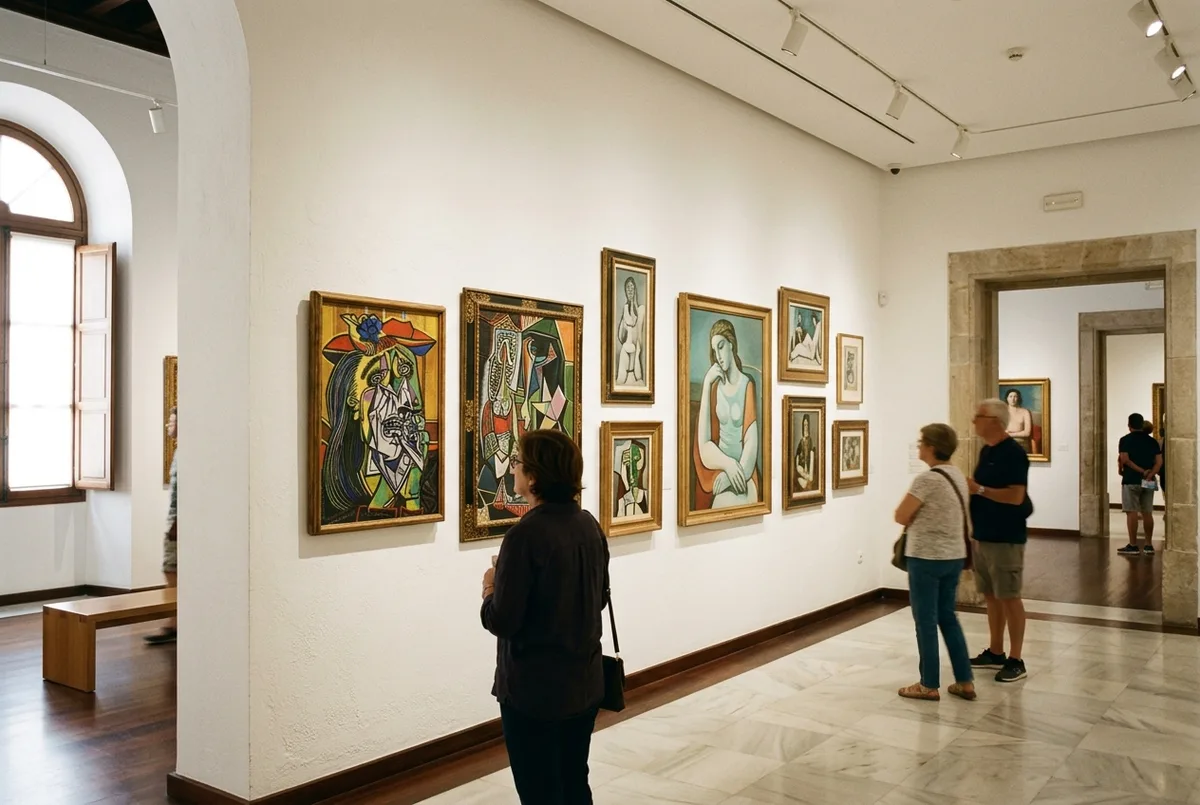
The museum’s Cubist holdings sit at the core of the picasso museum malaga paintings on display, representing the period when Picasso, alongside Georges Braque, broke figures and objects into fractured, geometric planes. These works mark the sharpest stylistic break in the entire collection, moving from the disciplined academic studies of the opening rooms into something that reads as genuinely radical even by today’s standards.
Because Cubism is the movement most people associate with Picasso’s name, this section tends to draw the longest dwell times from first time visitors, especially those using the audio guide to unpack how the fractured forms are actually built up on the canvas.
What Neoclassical Works Are on Display?
Alongside the Cubist rooms, the museum holds work from Picasso’s Neoclassical period, when he returned, at least partly, to calmer, more figurative forms even while continuing to experiment elsewhere. Several of the collection’s most personal pieces come from this stretch, including portraits connected to his own family life during that period. Seeing the Cubist and Neoclassical rooms close together highlights something easy to miss if you only know Picasso’s most famous works: he was often working in more than one style at the same time, not moving through a single straight line from realism to abstraction.
What Ceramics Are Part of the Collection?
Later galleries hold ceramic works from Picasso’s time in the south of France, reflecting a period when he applied his approach to form and pattern to functional objects rather than canvas alone. This section tends to surprise visitors who arrive expecting only paintings, since the playful, sometimes whimsical character of the ceramic pieces contrasts with the more intense Cubist and Neoclassical rooms earlier in the visit. It is a good reminder that Picasso’s restlessness extended well beyond painting into sculpture, printmaking and decorative arts.
Does the Museum Host a Temporary Exhibition?
Yes, alongside the permanent collection, the museum sets aside a dedicated wing for a picasso exhibition malaga visitors will not find anywhere else, a temporary show that rotates every few months and usually pairs Picasso’s work with a related artist or theme. Because the temporary program changes on its own schedule, the specific show running during your visit will not show up if you research the museum too far in advance. Check your ticket confirmation email or the official site closer to your travel date to see what is currently on display.
Temporary exhibitions typically add a meaningful amount of time to a visit, so if a specific show is the reason for your trip, it is worth confirming both the exhibition dates and whether it affects opening hours before you book.
Can You See Photos of the Collection Before You Visit?
Official picasso museum málaga photos of specific gallery rooms and individual pieces are published on the museum’s own site and social channels, and they are the most reliable way to preview the collection before you go, since third party reproductions can be outdated or incomplete. Below are a few honest notes on what photos typically show, useful if you are searching for a preview rather than planning to browse a full gallery here.
What do photos of the entrance courtyard usually show? Most images of the entrance capture the Palacio de Buenavista’s Renaissance facade and the sunlit courtyard just past the ticket desk, a useful preview of the building itself before you reach any artwork.
What do photos of the Cubist rooms typically show? Photos from this section usually highlight the fractured, geometric canvases hung on plain white walls, giving a clear sense of the room’s stripped back, gallery style presentation.
What do photos of the ceramics section usually show? Images from the ceramics rooms tend to focus on painted plates, vases and figurative pieces displayed in glass cases, distinct in tone from the painting heavy rooms earlier in the museum.
Are photography and video allowed inside the museum? Photography policies can change between temporary exhibitions and the permanent collection, so check current signage at the entrance or the official site before assuming you can photograph everything freely.
What Does the Palacio de Buenavista Add to the Visit?
The building housing the collection is worth slowing down for in its own right. The Palacio de Buenavista mixes a Renaissance stone facade with Mudejar interior details, and it has held National Monument status since 1939, meaning the structure predates the museum itself by decades. Basement galleries also hold Phoenician, Roman and Arabic archaeological remains uncovered during restoration work, adding a layer of Málaga’s deeper history beneath the Picasso collection above.
Many first time visitors focus entirely on the art and miss how much the architecture itself contributes to the experience, particularly the courtyard, which frames the whole visit before you even reach the first gallery.
How Does This Collection Compare to Other Picasso Museums?
Unlike the Picasso museums in Paris or Barcelona, which each emphasize different periods and hold larger overall collections, the Museo Picasso Málaga was built specifically around a family donation chosen to represent his full career in his birth city. That means fewer total works than some larger institutions, but a collection curated with a clear narrative arc rather than an encyclopedic spread. For most visitors, this makes the Málaga collection easier to take in during a single focused visit without feeling like you only saw a fraction of what is on offer.
Does the Collection Include Sculpture and Prints as Well as Paintings?
Yes, alongside the paintings and drawings that make up most of the galleries, the collection also holds sculptural pieces and printmaking work from different points in Picasso’s career. These pieces are spread through the museum rather than grouped into a single dedicated room, so it is worth reading the wall text carefully as you move between galleries rather than assuming every non-painted object belongs to the ceramics section near the end of the route. Printmaking in particular shows a side of Picasso’s technical range that the headline paintings do not always capture, since it reveals how he reworked the same image across multiple versions.
How Does the Museum Present the Collection to Visitors Who Are New to Picasso?
The museum does not assume prior knowledge of Picasso’s career, which is part of why the audio guide plays such a central role in the visit. Wall text throughout the galleries stays deliberately short, favoring dates and titles over long explanations, so first time visitors who want real context should lean on the audio commentary rather than expecting to piece the story together from labels alone. This approach keeps the galleries feeling open and uncluttered, though it does mean the experience differs noticeably depending on whether you use the audio guide or skip it.
For visitors who prefer a live explanation over an app, the guided tour option replaces the audio guide with a person who can answer follow up questions on the spot, something worth weighing if you are new to Picasso’s work and expect to have questions as you move through the rooms.
What Should You Know Before Visiting with Children?
Younger visitors sometimes respond better to the ceramics section than the painting heavy galleries earlier in the museum, since the playful shapes and bright colors of the ceramic pieces tend to hold attention more easily than wall mounted canvases. If you are visiting with children who have a limited attention span for galleries, consider planning a shorter route that prioritizes the Cubist rooms and the ceramics section rather than attempting the full chronological walk from the academic studies through to the end.
Which Pieces Should You Prioritize on a Short Visit?
If your time is limited, focus on the Cubist and Neoclassical rooms first, since they represent the sharpest stylistic contrast and the pieces most closely tied to Picasso’s international reputation. The academic studies and ceramics sections reward a slower look if you have time, but they are the easiest to skim through quickly without losing the core of the visit. We break down specific standout pieces worth prioritizing in the best Picasso paintings to see at the Museo Picasso Málaga.
What Else Is Worth Seeing Besides the Art?
Beyond the galleries, the museum’s bookshop and garden cafe are worth building into your visit, especially if you want exhibition catalogues or a quiet spot to sit before heading back into the old town. We cover what to expect, and whether it is accessible without a museum ticket, in our guide to the Picasso Museum Malaga gift shop and bookstore.
How Does the Collection Fit Into Your Wider Visit?
Seeing the collection is usually the main reason to book a ticket in the first place, so once you know what to expect inside, the next step is choosing the right entry option. Our Picasso Museum Malaga tickets guide compares standard entry, the guided tour and the combined ticket that also covers Picasso’s birthplace house, so you can match your ticket to how deep you want to go into this collection.
If you want the fuller personal story behind the art, including where Picasso actually grew up, our guide to Picasso’s birthplace museum in Malaga covers the smaller, more intimate site across town that pairs naturally with a visit here.
Insider Tips for Seeing the Collection
Use the included audio guide rather than skipping it, since wall text throughout the museum stays brief and the audio commentary fills in context you would otherwise miss, especially in the early academic rooms. If a temporary exhibition is running during your visit, budget extra time rather than assuming it will only add a few minutes, since some shows add entire additional rooms to the standard route. Arrive at opening or after 4pm if you want to study specific pieces without a crowd forming behind you, particularly in the smaller Cubist rooms where space is tighter.
Frequently Asked Questions About the Picasso Museum Malaga Collection
How many works are in the Picasso Museum Malaga collection?
The permanent collection totals 141 works spanning painting, drawing, sculpture and ceramics across Picasso’s full career.
Who donated the collection to the museum?
The core collection came from Christine Ruiz-Picasso, Picasso’s daughter in law, and Bernard Ruiz-Picasso, his grandson, specifically so the work could be shown in his birth city.
Does the collection include Picasso’s most famous paintings?
The collection is not built around his single most famous headline paintings held elsewhere, but around a curated selection representing every major period of his career, including several rarely shown pieces from the family’s own holdings.
Is photography allowed inside the galleries?
Photography rules can vary between the permanent collection and temporary exhibitions, so check current signage at the entrance or the official site before you assume you can photograph freely.
How long does it take to see the full collection?
Most visitors spend 90 minutes to two hours seeing the full permanent collection at a comfortable pace, longer if a temporary exhibition is running during your visit.
For the most current information on what is on display, including the active temporary exhibition, check the official Museo Picasso Málaga website.